The Biak Regency Legislative Council Forms a Working Committee, Mintje Yawan Urges a More Humane Resolution to the Demolition Case of Biak Mina Jaya Residents’ Homes
Terkini
17 Mar 2026 19:07
•
4 min read
•
74 views
•
By Hend DK
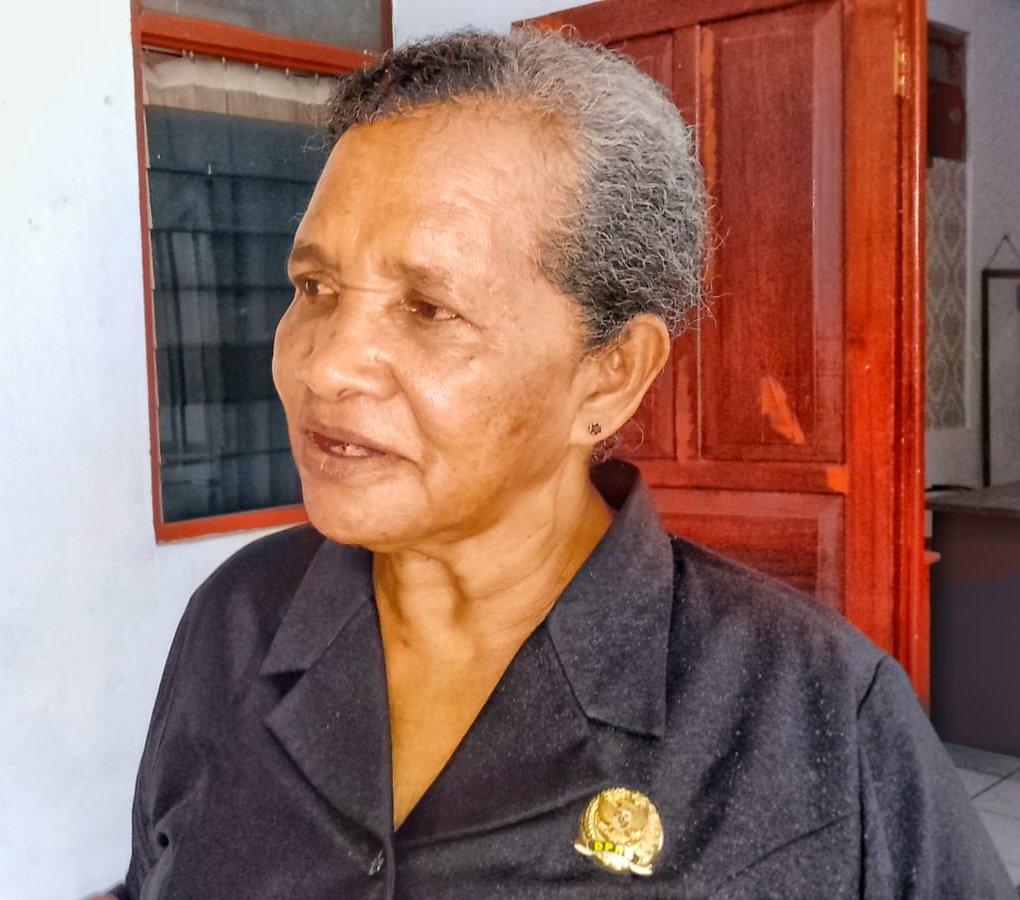
Foto : Hend DK/waironnews.com
Biak, Waironnews.com – The Vice Chair of the Biak Numfor Regency Legislative Council (DPRK), Mintje Anna Yawan, has highlighted the demolition of residents’ houses in the Biak Mina Jaya (BMJ) housing complex, RT 03/RW 02.
She conveyed this to the media after leading a joint Hearing Meeting (RDP) involving Commissions I, II, and III of the DPRK Biak Numfor on Monday, March 16, 2026.
Mintje stated that the demolition incident that occurred on March 12, 2026, indicates the need for serious handling of issues affecting residents who have long occupied the housing area.
She emphasized that any resolution must prioritize a humanitarian approach.
“In this matter, we do not look at where they come from, their employment status, or other backgrounds. The most important aspect is humanity,” said Mintje.
She explained that based on information received by the DPRK Biak Numfor, residents have occupied the housing complex since around 2005 to 2006. At that time, the houses were considered poorly maintained. Residents then cleaned, repaired, and reorganized the buildings to make them livable, with the permission of the landowner and through certain payment agreements.
According to Mintje, residents claimed that when they first occupied the houses, the structures were still standing but required repairs and cleaning.
Therefore, they made efforts to maintain and improve the homes according to their respective capabilities.
She added that this situation has made residents anxious following the demolition plans. After living in and maintaining the houses for many years, they feel they have both responsibility and rights over the homes they occupy.
“As people who have a place to live, it is natural for them to maintain and make improvements as needed, especially after they feel they have made payments to the landowner,” she said.
Mintje also noted that for years, the management had not maintained the housing complex, making it appear neglected despite being considered an asset.
She further stated that the DPRK Biak Numfor received an emergency report during the demolition process and immediately intervened to halt the activity.
According to her, demolishing homes of residents who have lived there for decades cannot be carried out without clear legal mechanisms.
“Demolition should be conducted through a court ruling or a lawful legal process,” she said.
Mintje also highlighted the presence of security personnel at the site during the demolition and blockade.
She argued that the approach taken should have prioritized dialogue and humanitarian considerations.
“We need to look at the role of authorities in this situation. The approach should be more humane, not merely an assertion of power,” she added.
She stressed that as a state governed by law, every action must follow clear procedures. Although various mediation efforts have been made, she emphasized that there must be no coercive actions against any party.
During meetings with residents, Mintje also obtained information regarding a payment agreement between residents and the management.
Under the agreement, each family is required to pay Rp1 million per month for 80 months, or approximately six years and eight months, starting from August 30, 2024, until 2029.
However, she noted that the agreement had only been running for about one year when a blockade occurred in October, and early in the second year, demolitions were already carried out against residents who were considered to have not completed their payments.
“This situation certainly needs to be reconsidered from a humanitarian perspective,” said Mintje.
She assessed that assets which had long been neglected, then repaired and occupied by the community through significant effort, should not simply be reclaimed without a clear solution.
In the joint Hearing Meeting (RDP) held by the DPRK Biak Numfor, Mintje added, the regional legislative body also decided to establish a Working Committee (PANJA) to further investigate and resolve the issue comprehensively.
“The formation of the Working Committee (PANJA) is expected to find the best and fairest solution for all parties,” she concluded.
HDK
Related Articles




Recent Articles
•
Perkuat Koordinasi, Poksus DPRK Biak Hadir dalam Kunjungan Kerja Poksus DPR Papua di Supiori
•
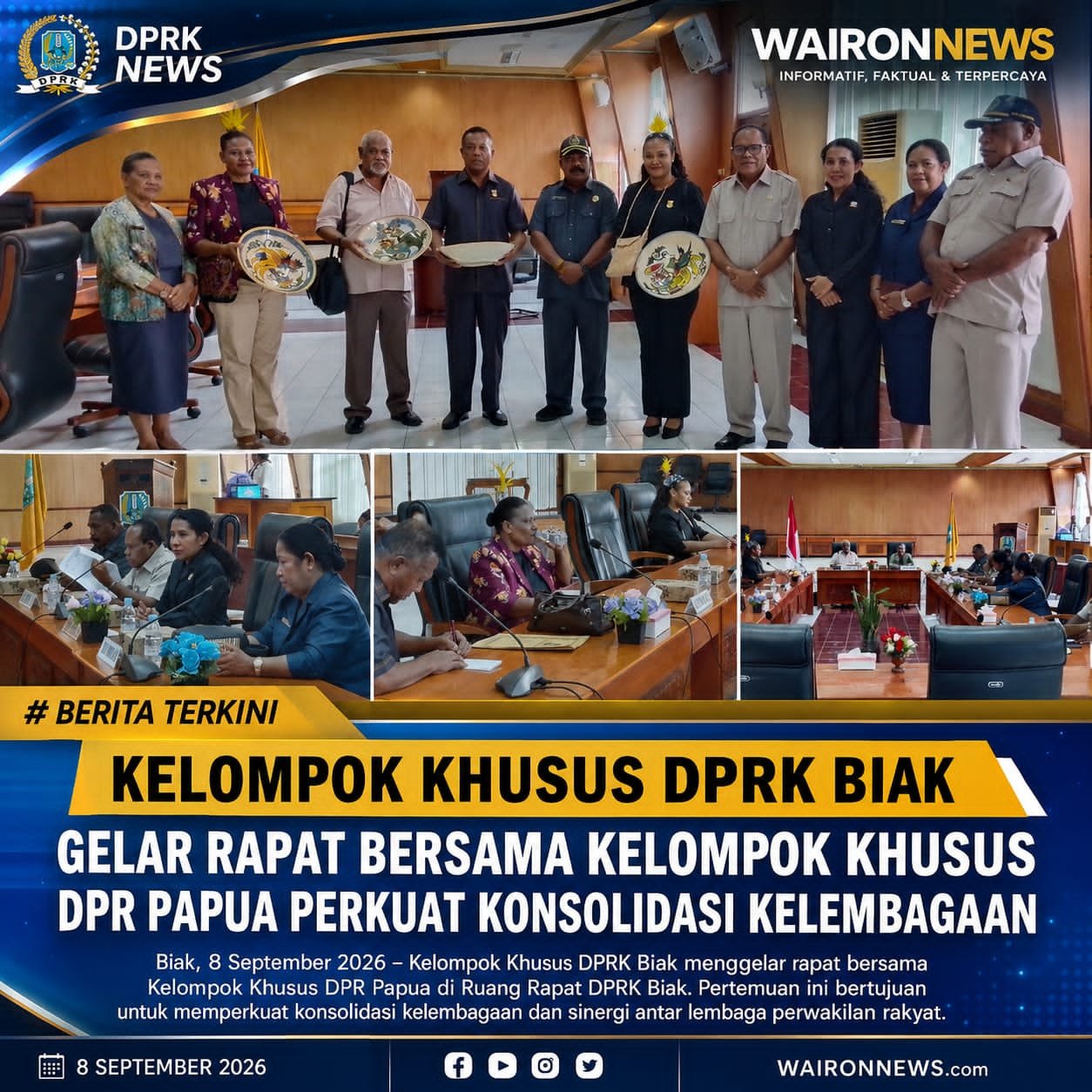
Kelompok Khusus DPRK Biak Gelar Rapat Bersama Kelompok Khusus DPR Papua Perkuat Konsolidasi Kelembagaan
•
Tinjau Kebutuhan Air Bersih, DPRK Biak Numfor Survei 5 Kampung
•
Diduga Ada Oknum di Balik Kebakaran Hutan Berulang di Biak Numfor
•
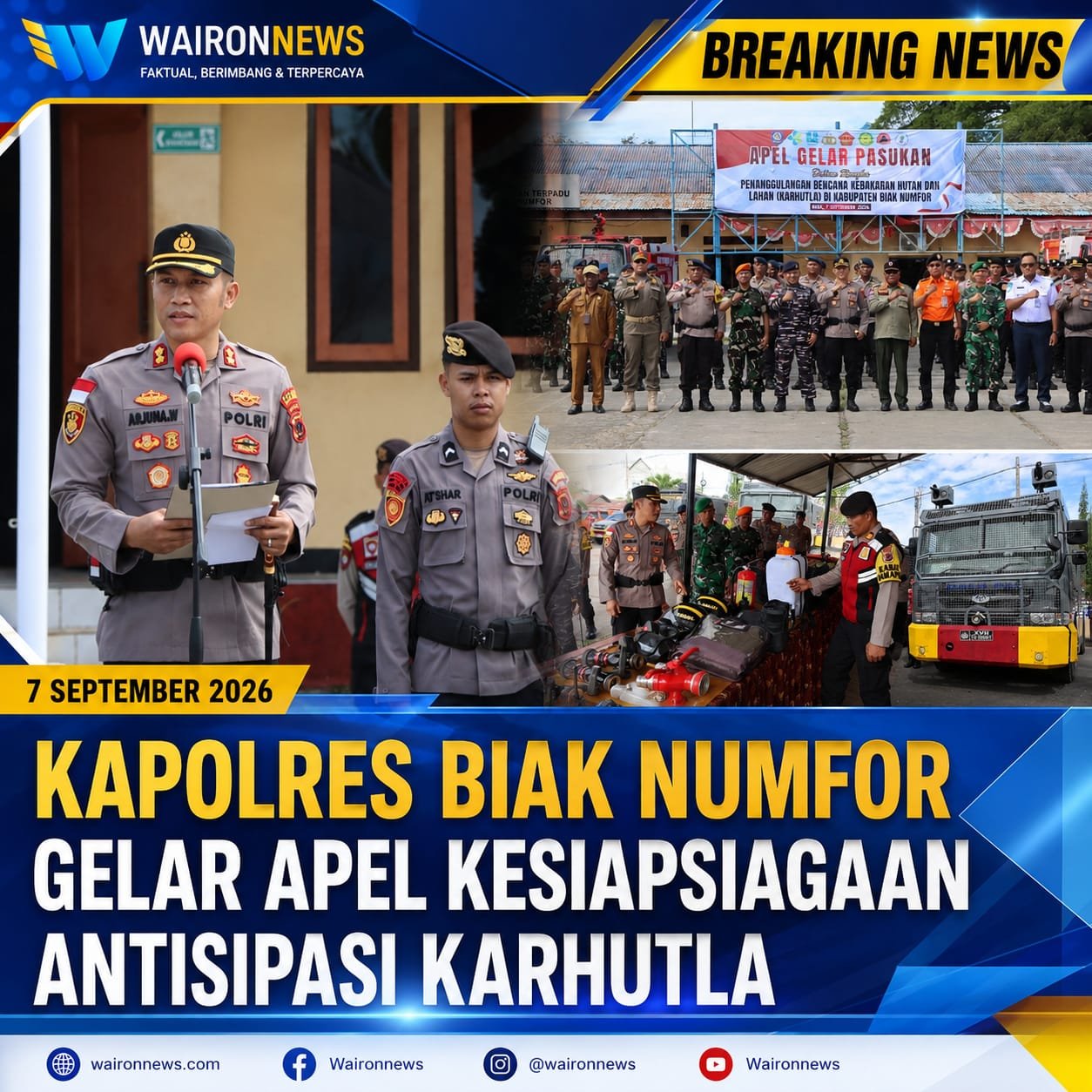
Kapolres Biak Numfor Gelar Apel Kesiapsiagaan Antisipasi Karhutla
•
DP3AKB Biak Gelar Pengembangan KIE Perlindungan Khusus Anak di Kampung Urfu
•
BKPSDM Biak Turun ke Kepulauan, Dampingi ASN Isi E-Kinerja
•
Pemkab Biak Kukuhkan 634 PPPK, Bupati: Saatnya Beri Kontribusi untuk Masyarakat
•
Sekwan DPRK Biak Hadiri Penandatanganan Perjanjian Kerja, 24 Pegawai Sekretariat Diangkat PPPK
•
Di Tengah Tekanan Fiskal, Gunadi Sebut Pengangkatan 634 PPPK Langkah Afirmatif Bupati
Popular Articles
•
Petinju Biak Borong Medali di Pace Boxing Cup I 2026, Anjel Rumbewas Sabet Emas
•
Pertamina Jajaki Suplai LPG dari Jayapura untuk Perkuat Stok di Biak
•
Rocky Warpur Tinggalkan Dunia Jurnalistik, Kini Pimpin Kampung Saba
•
Menjelang Jumat Agung, Sekolah Minggu Jemaat Karmel Bosnik Gelar Sekolah Alkitab
•
Wabup Sampaikan Pidato Bupati, Pemkab Biak Tegaskan Komitmen Perbaikan Tata Kelola